

Brevo (formerly Sendinblue) prices its plans around email volume instead of contact count, so costs get harder to predict once automation and send frequency pick up. Across the client accounts we’ve evaluated and set up, the right alternative depends heavily on what the program actually needs. Based on our research, testing, and the client accounts we’ve evaluated show that MailerLite, Moosend, and Sender suit teams that want speed and lighter pricing. Klaviyo and Omnisend fit ecommerce brands. GetResponse, ActiveCampaign, and HubSpot serve teams that need funnel building or CRM-grade automation. Mailjet fits teams with multiple people editing campaigns together. Kit and beehiiv are built for creators and newsletter publishers.
Quick Overview
How We Chose Brevo Alternatives
We evaluated each email service provider against the criteria that matter most when businesses outgrow Brevo:
- Automation capabilities
- Segmentation and personalization depth
- Pricing at realistic list sizes and sending volumes
- Ecommerce functionality
- Reporting and revenue attribution
- Deliverability features
- Native integrations
- Team collaboration
- Migration complexity and onboarding
Rather than comparing feature lists alone, we looked at how each platform performs in real-world email marketing programs. Our recommendations draw on our experience working across 40+ ESPs, alongside a review of each vendor’s current documentation, pricing, and feature availability. Because plans, pricing, and features change regularly, we verified these details against each vendor’s published information before updating this guide. A full breakdown of our evaluation process appears in the methodology section below.
Brevo Pros and Cons
Pros
- Clean design and user-friendly platform that most teams pick up quickly without a heavy onboarding lift
- Easy scheduling and automation that users consistently point to as a real efficiency gain
- A true all-in-one setup: email, SMS, WhatsApp, live chat, and automation workflows in a single platform
- Reliable transactional email delivery, which matters for businesses depending on order confirmations, password resets, and similar sends
- Useful built-in analytics that give a clear read on how campaigns are performing
- Generous free plan (300 emails per day, unlimited contact storage), with automation included for up to 2,000 contacts
Cons
- Email Template customization is limited, which restricts more complex campaign design
- Advanced features and back-end processes carry a real learning curve once you move past basic sends
- Volume-based pricing gets expensive fast for accounts running frequent sends or multi-step automations, and SMS costs in particular can escalate under Brevo’s tiered structure
- Some users have reported account suspensions and reliability issues, which may be worth considering if uninterrupted email sending is business-critical.
- Inconsistent deliverability, although results vary depending on sender reputation, authentication, and list quality.
- Phone support is gated to Business and Enterprise tiers
- Ecommerce features (product recommendations, discount codes, revenue reporting) are thin without third-party add-ons
None of this makes Brevo a poor product. For an early-stage business sending one or two campaigns a month to a small list, it remains a reasonable, affordable option. The friction shows up specifically as sending frequency and automation complexity grow.
Brevo Alternatives at a Glance
| Platform | Ease of Use | Best For | Key Features | Pricing Model | Starting Price (Paid) | Free Plan |
| MailerLite | Fast, minimal learning curve | Fast workflows, small teams | Behavioral automation, landing pages, A/B testing | Per subscriber | $12/mo (Comfort) | 250 subscribers, 2,500 emails/mo |
| Mailchimp | Easy to start, gets busier as features stack up | Integrations, brand recognition | Customer Journey builder, AI content tools, large template library | Per contact | $13/mo | 250 contacts, 500 emails/mo |
| Moosend | Intuitive, quick to edit workflows | Budget automation | Unlimited sends on paid tiers, AI writing assist | Per contact | $9/mo | Free trial only (30 days) |
| Omnisend | Clients sometimes need a short ramp-up session | Ecommerce, DTC brands | Prebuilt cart recovery and win-back flows, SMS plus email in one builder | Per contact | $16/mo | 250 contacts, 500 emails/mo |
| Klaviyo | Steeper learning curve, powerful once set up | Deep ecommerce personalization | Predictive analytics (churn, LTV), unified customer profiles | Per profile | $20/mo | 250 profiles, 500 emails/mo |
| ActiveCampaign | Real learning curve for advanced logic | Advanced automation, CRM | Conditional branching, lead scoring, built-in CRM | Per contact | $15/mo | None (14-day trial) |
| HubSpot | Easy for basics, complex at scale | CRM plus full marketing suite | Free CRM, sales and service data in one system | Per contact plus per seat | $15 to $20/mo/seat | 2,000 emails/mo, limited contacts |
| Constant Contact | Straightforward day to day, though some settings take digging to find | Events and social integration | Built-in event ticketing, social scheduling | Per contact | $12/mo | None (short free trial) |
| Kit | Simple, creator focused | Creators, digital products | Native digital product sales, single list tagging | Per subscriber | $39/mo | Up to 10,000 subscribers |
| beehiiv | Easy for publishing, pricing needs planning | Newsletter publishers | SEO blog plus newsletter from one post, 0% commission monetization | Per subscriber | ~$43 to $49/mo | 2,500 subscribers, unlimited sends |
| GetResponse | Simple for basic sends, funnel builder takes a bit of orientation | End-to-end conversion funnels | 30+ funnel templates, built-in webinars | Per contact | $19/mo | 500 contacts, limited monthly sends |
| Sender | Very easy, clean dashboard | Budget deliverability | Automation plus SMS included free, generous free tier | Per contact, with send multipliers | ~$7/mo | 2,500 contacts, 15,000 emails/mo |
| AWeber | Easy, dated interface | Simple setup, built-in payments | Built-in payments (100+ currencies), phone support on free plan | Per subscriber | $12.50 to $15/mo | Permanent free (500 subs/3,000 emails) |
| Mailjet | Straightforward, real-time collaboration is a standout | Team collaboration on campaigns | Simultaneous multi-user editing, 10-version A/B testing | Per contact | $9/mo | 6,000 emails/mo, 200/day, 1,000 contacts |
The recommendations below combine vendor research with our testing and implementation experience, but the best choice ultimately depends on your business model, team size, and automation requirements. Pricing changes periodically across every platform in this table. Confirm current tiers on each vendor’s pricing page before committing.
Top Brevo Alternatives By Use Cases
The best Brevo alternative also depends on your priorities, whether you need easy setup, advanced automation, ecommerce features, or a built-in CRM. Below are top Brevo alternatives based on the most common ask from our clients:
Best for Simplicity and Value:
MailerLite is a high-value, effective tool for basic email marketing with automated workflows, direct digital product sales, a built-in website, and a landing page builder.
Best for Ecommerce:
Omnisend has easy setup, deep online store integrations, affordable pricing, and built-in SMS channels. Klaviyo provides data-heavy enterprise and Shopify stores, advanced segmentation, and behavioral
tracking.
Best for Advanced Automation:
Brands can coordinate campaigns across emails, SMS, and WhatsApp within ActiveCampaign. It also supports advanced segmentation, sales pipelines, and complex customer journeys.
Best for Transactional Needs:
For reliable API delivery and automated, user-triggered messages running alongside email campaigns, Mailjet is the apt choice.
Best for CRM:
HubSpot offers an integrated CRM-powered email marketing platform to create and track personalized emails with customer data.
Best for Creators and Publishers:
Kit and beehiiv are creator-first email marketing platforms. Kit allows bloggers, authors, and online business owners to send targeted newsletters and sell digital products. Beehiiv has built-in referral programs, monetization, and advanced analytics.
1. MailerLite
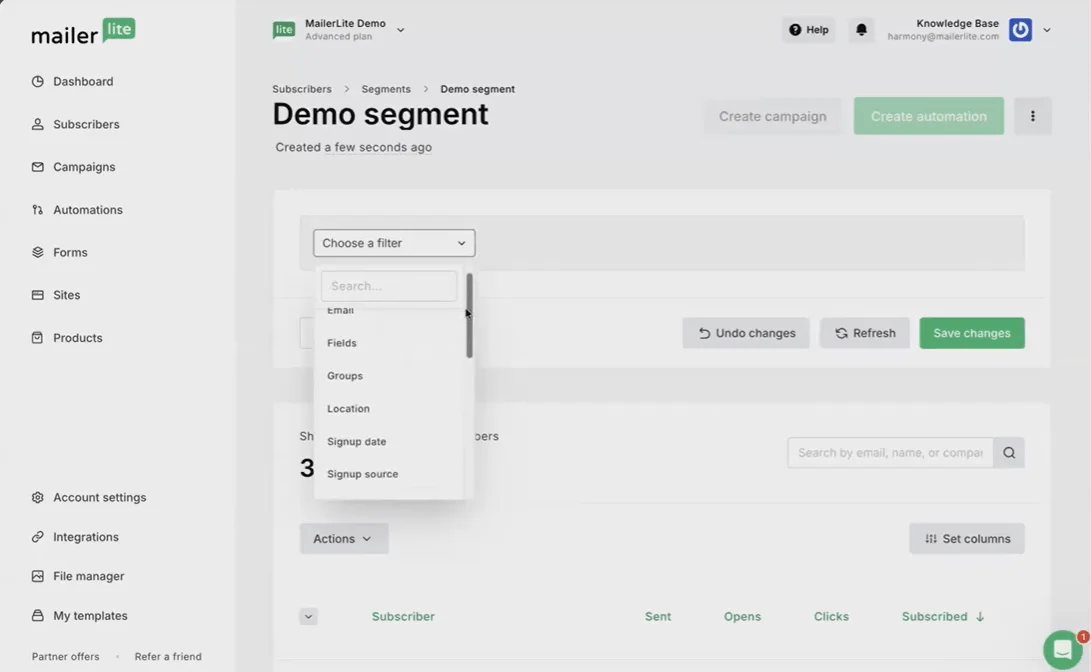
We recommend MailerLite often for clients who are tired of fighting their email platform just to get a campaign out the door. Speed matters more than it sounds like it should: a marketing coordinator who can build and ship a campaign in twenty minutes sends more campaigns than one fighting a clunky editor for an hour, and that difference compounds over a year. During setup, clients consistently comment on how few clicks it takes to clone a campaign or spin up a new automation compared to what they were used to on Brevo.
Standout features
- Drag-and-drop editor with a clean, minimal layout
- Built-in landing pages, popups, and a lightweight website builder
- Behavioral automation triggers
- A/B testing for both emails and signup forms
- Strong real-world deliverability, particularly during high-volume sends
Pricing
| Plan | Price | Includes |
| Free | $0/mo | 250 subscribers, 2,500 emails/mo, 2 user seats, core automation and landing pages |
| Comfort | From $12/mo (500 subs) | Unlimited templates, 50 automations, 10 websites/landing pages, AI writing assistant, smart sending |
| Power | From $25/mo (500 subs) | Unlimited emails, automations, users, landing pages; multiple automation triggers; 24/7 live chat |
Where MailerLite beats Brevo: From our testing, MailerLite’s campaign builder is noticeably faster for day-to-day campaign production than Brevo’s. MailerLite lets creators sell digital products, including subscriptions, directly through a Stripe integration. Brevo doesn’t offer that at all.
Where Brevo wins: Brevo’s free plan is now considerably more generous on both subscriber count and send volume since MailerLite’s July 2026 cut. MailerLite also has no native SMS, live chat, or CRM.
A marketing team shipping several campaigns a week and staying purely in email is usually the clearest fit. Accounts leaning on SMS or WhatsApp as part of their strategy get more mileage staying on Brevo.
2. Mailchimp
Based on what we’ve seen with clients, Mailchimp is usually the platform businesses know best before they speak with us. It’s comfortable and familiar, but that familiarity sometimes hides how much its billing model has changed over the years. In our migration audits, the first thing we check is whether a client is paying for contacts they haven’t emailed in months, since Mailchimp bills every stored contact, including unsubscribes.
Standout features
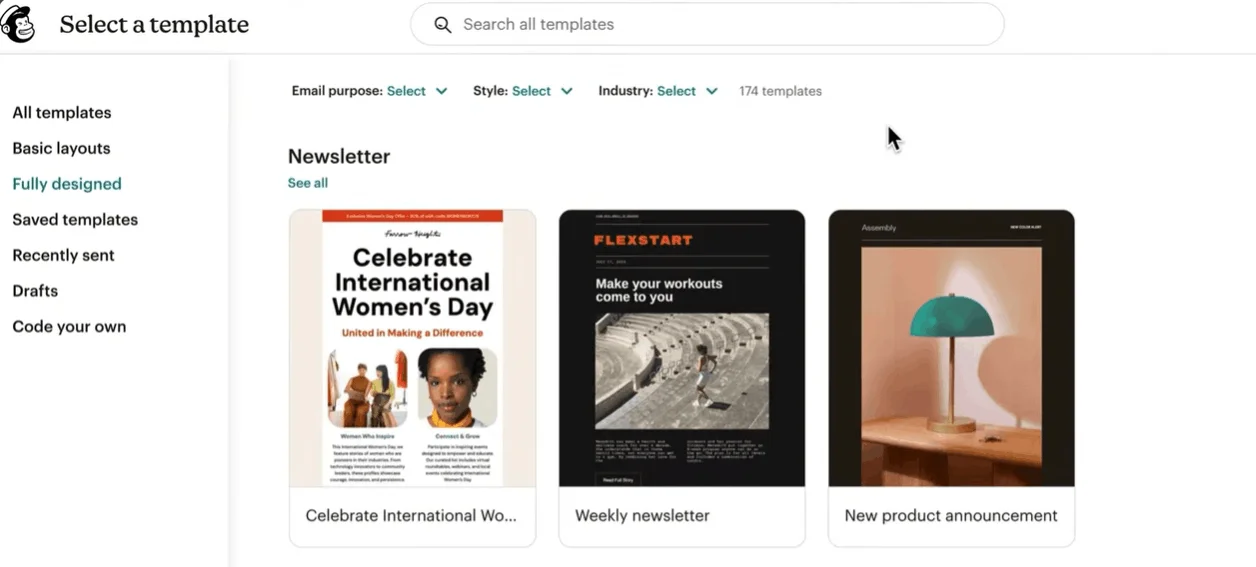
- Large industry-specific template library
- AI-assisted content generation for subject lines and copy
- Customer Journey builder with dozens of behavioral triggers
- Website and landing page builder with SEO controls
Pricing
| Plan | Price | Includes |
| Free | $0/mo | 250 contacts, 500 emails/mo, single-step automation only |
| Essentials | $13/mo | 5,000 emails/mo, 3 users, template library |
| Standard | $20/mo (500 contacts) | Multi-step automation, Customer Journey builder, generative AI tools |
| Premium | $350/mo | Unlimited users/audiences, advanced segmentation, phone support |
Where Mailchimp beats Brevo: Its per-product revenue reporting matters for a specific reason: it ties a campaign directly to a dollar figure, so an ecommerce team can tell whether last Tuesday’s promo email actually moved product rather than just guessing from open rates. Brevo doesn’t report at that level. Mailchimp also connects to well over 300 apps against Brevo’s roughly 60.
Where Brevo wins: Brevo includes its full automation suite for free. Mailchimp gates any multi-step automation behind Standard.
Based on what we’ve seen with ecommerce clients, Mailchimp’s revenue reporting is usually the biggest reason businesses switch from Brevo. Teams running multi-step nurture sequences on a tight budget generally do better staying on Brevo’s free automation tier.
3. Moosend
Moosend doesn’t get the brand recognition of the bigger names on this list, and that’s part of why it’s underrated. Based on our research into pricing models and sending limits, unlimited sending becomes particularly valuable for businesses sending daily campaigns, since platforms that cap sends by contact count start charging extra exactly when a campaign calendar gets busy.
Standout features
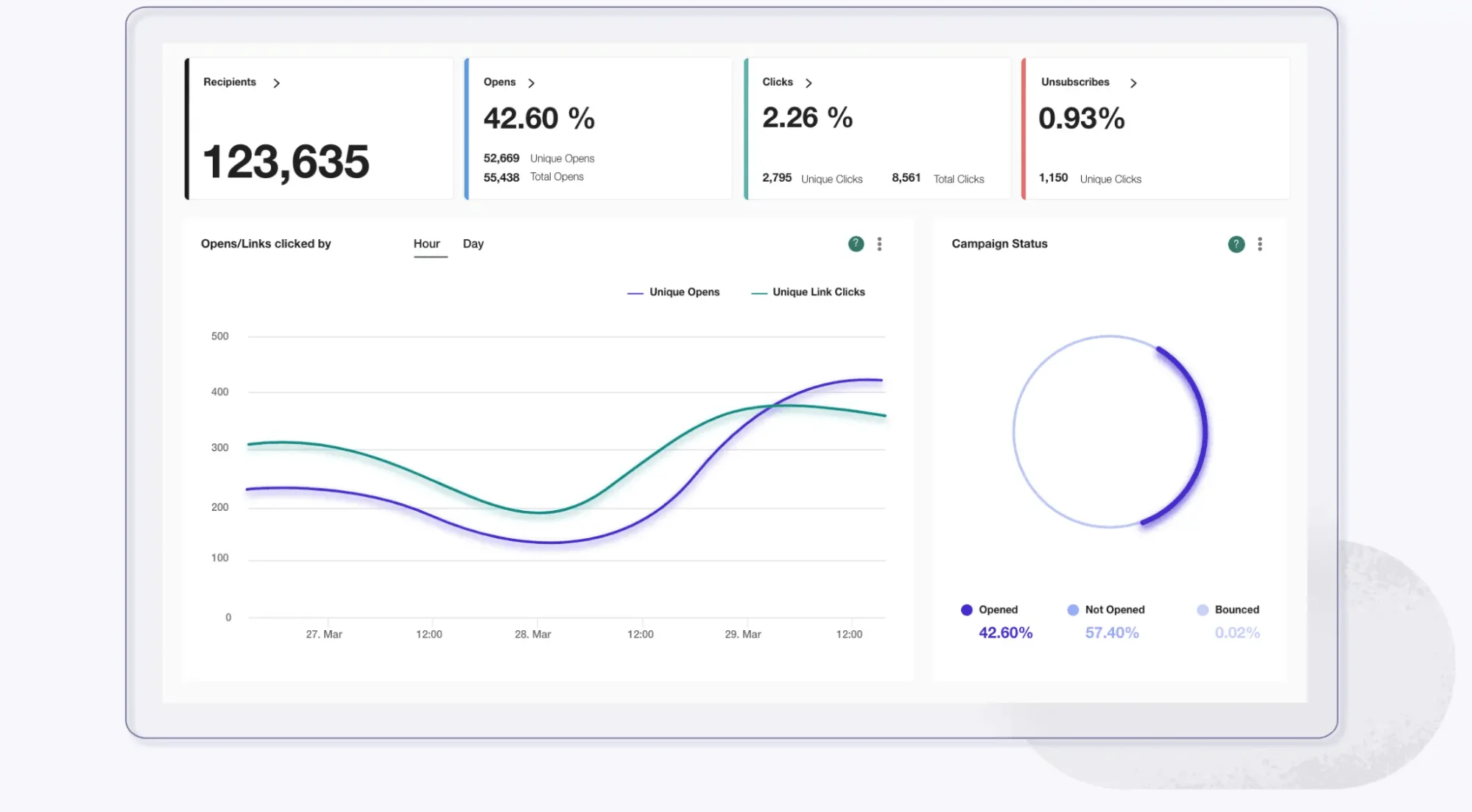
- Unlimited email sending on lower tiers
- Visual automation builder that is quick to edit
- Built-in landing pages, forms, and templates
- AI-assisted writing and workflow suggestions
Pricing
| Plan | Price | Includes |
| Free trial | 30 days (no permanent free plan) | Full Pro feature access, up to 1,000 contacts |
| Pro | From $9/mo, or $7/mo billed annually (500 contacts) | Unlimited sends, campaigns, automation, landing pages |
| Moosend+ / Enterprise | Custom pricing | Dedicated IP, transactional email, priority support |
Where Moosend beats Brevo: Countdown timers and AI-powered product recommendations come built in. In Brevo, both require third-party integrations.
Where Brevo wins: Moosend has no SMS, WhatsApp, chat, or CRM features. Brevo also runs a permanent free plan, while Moosend’s free access is limited to a 30 day trial.
In accounts sending daily campaigns, Moosend’s flat unlimited pricing tends to beat contact-based competitors on cost alone. The moment multichannel messaging enters the requirements, it’s no longer the right fit.
4. Omnisend
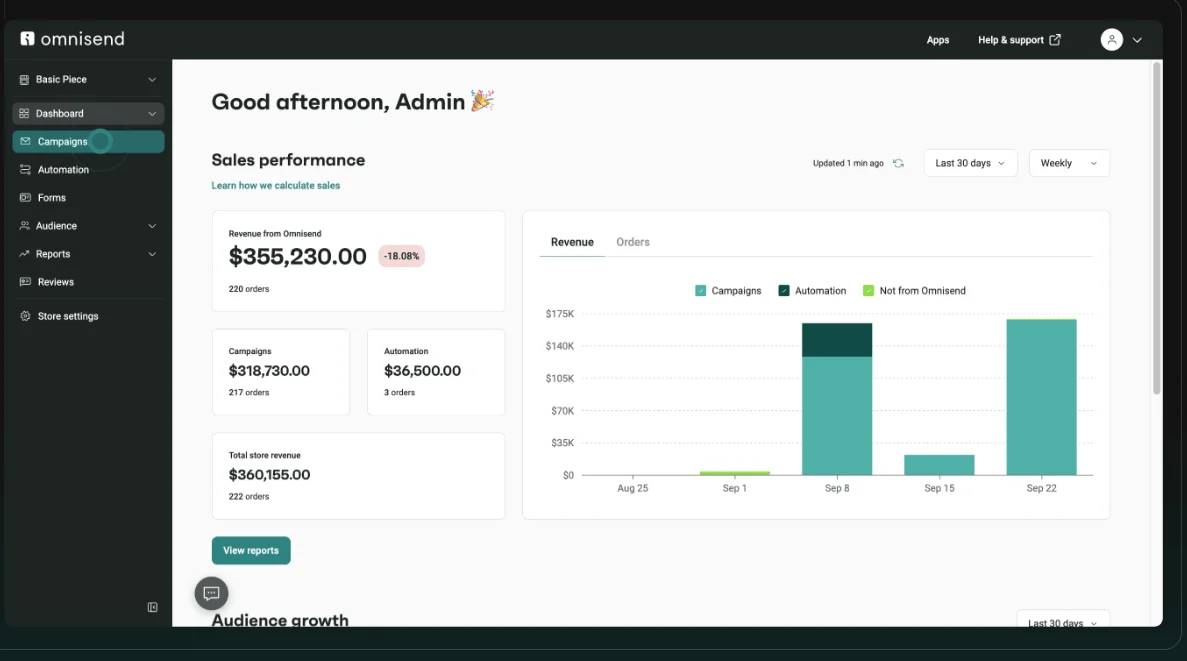
Every ecommerce client we’ve set up on Omnisend asks the same question in the first onboarding call: why didn’t we do this sooner? The prebuilt flows for abandoned cart, browse abandonment, and win-back campaigns matter because they replace weeks of manual automation building with a template that’s already been tuned for ecommerce behavior, so a store can have real revenue-generating automation live within days.
Standout features
- Email and SMS built into a single automation workflow
- Pre-built ecommerce flows for welcome series, cart recovery, and win-back campaigns
- Real-time segmentation based on shopping behavior
- One-click integrations with Shopify, WooCommerce, and BigCommerce
Pricing
| Plan | Price | Includes |
| Free | $0/mo | 250 contacts, 500 emails/mo, full automation features, small SMS allotment |
| Standard | $16/mo (500 contacts) | 6,000 emails/mo, unlimited automation, SMS sold separately |
| Pro | $59/mo (2,500 contacts) | Unlimited emails, SMS credits equal to plan price |
Where Omnisend beats Brevo: The prebuilt cart recovery and win-back flows go live far faster than building equivalent automations in Brevo from scratch, and the e-commerce-specific segmentation catches shopping behavior Brevo’s segmentation isn’t built to see.
Where Brevo wins: Omnisend is retail-specific. Non-ecommerce accounts get little value from it. Brevo also covers WhatsApp, which Omnisend doesn’t.
When comparing automation builders side by side, Omnisend’s ecommerce templates are the clearest reason to migrate a Shopify or WooCommerce store. Outside ecommerce, it isn’t the right alternative.
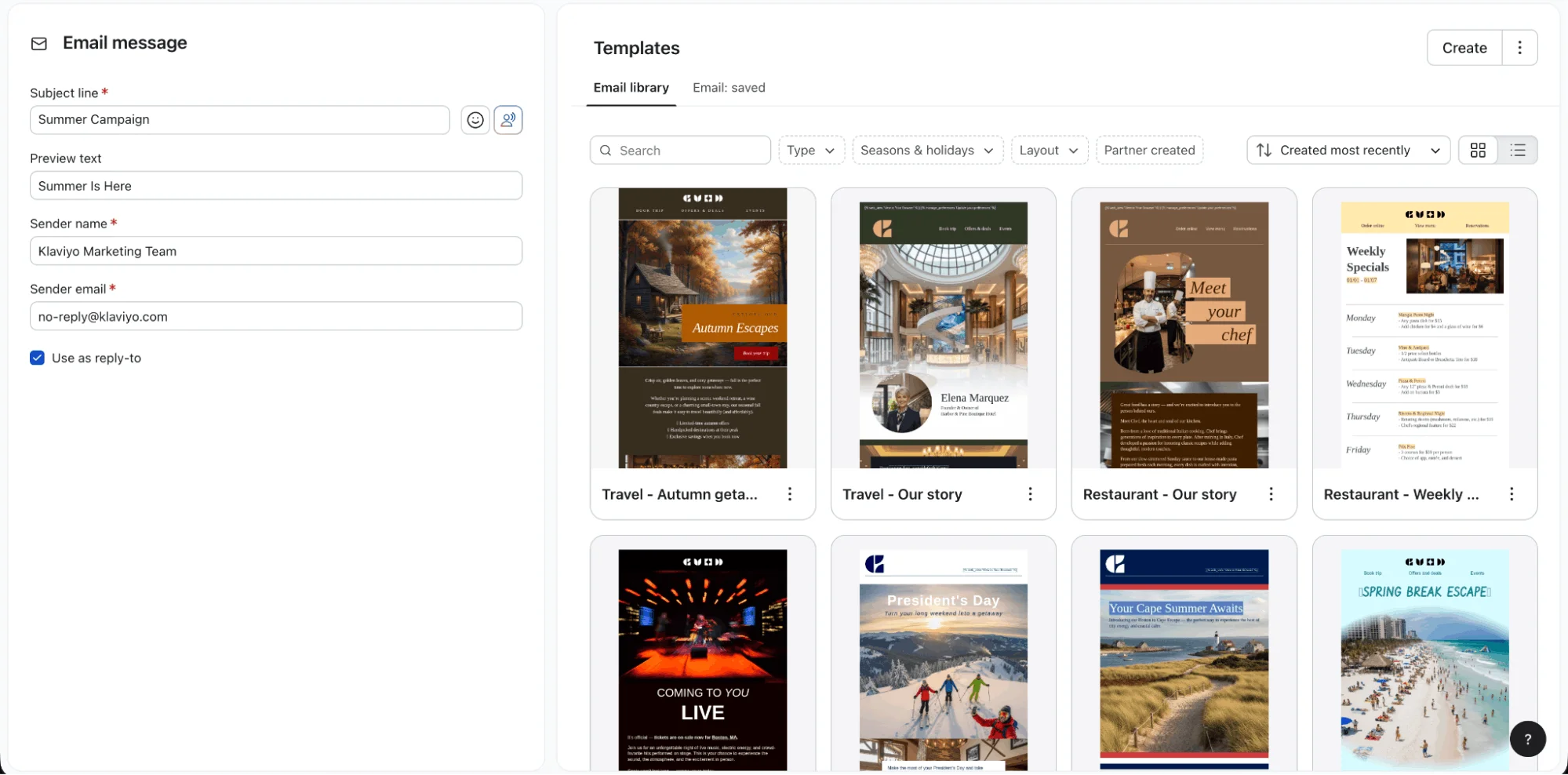
5. Klaviyo
Klaviyo tends to be the platform clients graduate into once their store has enough purchase history to make prediction actually useful. Based on our testing and ecommerce implementations, predictive analytics become much more useful once a store has accumulated meaningful purchase history.
A churn model built on three months of orders is a lot less reliable than one built on two years, so we’re careful about recommending Klaviyo too early. A brand new store with a thin customer history won’t see much benefit from the predictive segmentation, and the price tag stings more when the data isn’t there yet to justify it.
Standout features
- Behavioral segmentation with predictive analytics for churn and lifetime value
- Email, SMS, and WhatsApp under one system
- Native Shopify, WooCommerce, and BigCommerce integrations
- Unified customer profiles for personalized messaging at scale
Pricing
| Plan | Price | Includes |
| Free | $0/mo | 250 profiles, 500 emails/mo, 150 SMS/MMS credits |
| From $20/mo (251–500 profiles) | 5,000 emails/mo, predictive analytics, unified profiles | |
| Email and SMS | From $35/mo (251–500 profiles) | 1,250 SMS/MMS credits/mo, plus everything in the Email plan |
Where Klaviyo beats Brevo: Its behavioral segmentation surfaces repeat buyer and churn risk patterns that Brevo’s segmentation simply doesn’t catch, and that difference tends to show up directly in revenue attributed to individual campaigns.
Where Brevo wins: Pricing scales quickly with active profiles once a list grows past a few thousand contacts. It’s also overkill for non-ecommerce use cases, where Brevo’s simpler segmentation is plenty.
Stores with a meaningful purchase history to segment against see the clearest return on the premium. Below that stage, Brevo or Omnisend covers the same ground for less.
6. ActiveCampaign
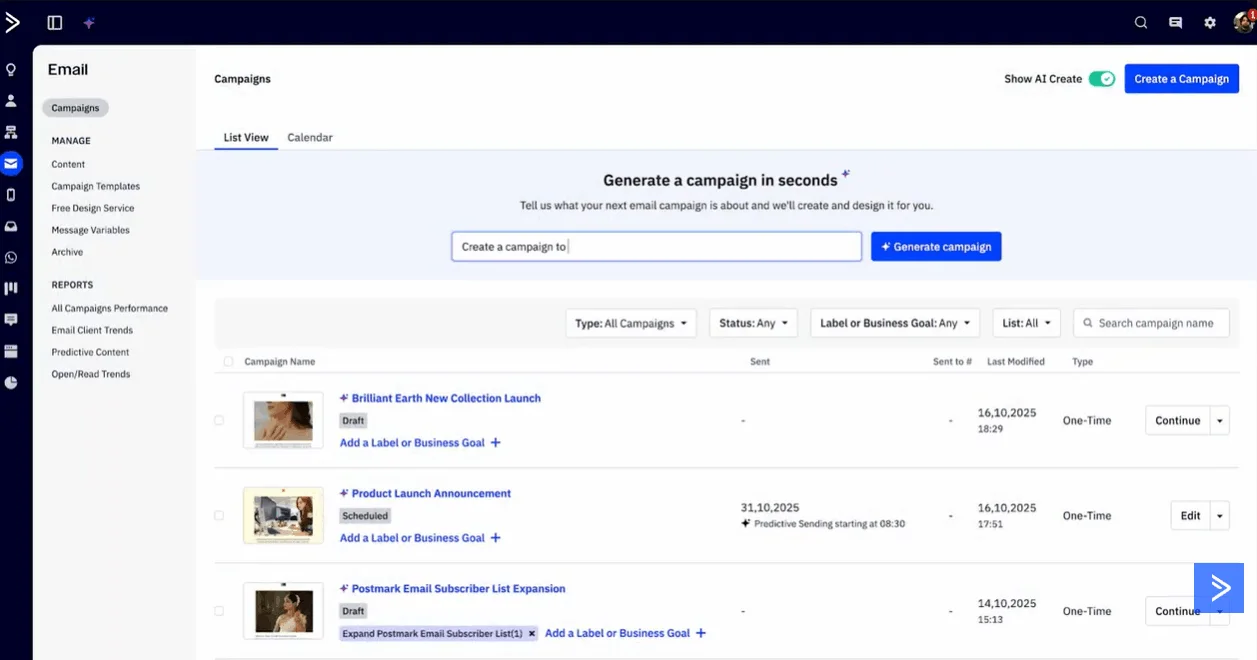
ActiveCampaign is usually the platform we bring up when a client’s automation ambitions have outgrown what a simple if this then that workflow can handle. Conditional branching matters because it lets a single automation react differently depending on what a contact actually does, opens versus doesn’t, or clicks a specific link versus another, rather than sending everyone down the same path. Based on what we’ve seen with clients, ActiveCampaign delivers the most value when teams have the time and resources to build and maintain advanced automation.
Standout features
- Advanced workflow builder with splits and conditional paths
- Built-in CRM and lead scoring
- Email, SMS, WhatsApp, and social messaging inside one automation
- Reporting tied directly to revenue outcomes
Pricing
| Plan | Price | Includes |
| Starter | $15/mo billed annually (1,000 contacts) | Basic automation, site tracking, ecommerce integrations |
| Plus | $49/mo (1,000 contacts) | Conditional branching, CRM lite, landing pages |
| Professional | $79/mo (1,000 contacts) | Conditional content, conversion attribution, priority support |
| Enterprise | $145/mo (1,000 contacts) | CRM integrations, custom objects, dedicated account team |
Where ActiveCampaign beats Brevo: Its conditional branching lets teams build genuinely personalized customer journeys that Brevo’s simpler automation logic isn’t built to replicate.
Where Brevo wins: There’s a real ramp-up period. In our implementation experience, it typically takes a team two to three weeks to get fully comfortable building in ActiveCampaign, compared to a much shorter onboarding curve on Brevo. ActiveCampaign also has no free plan.
Teams with the bandwidth to actually build and maintain conditional logic tend to see this investment pay off. Where automation needs stay basic, the ramp-up time alone makes Brevo the more practical choice.
7. HubSpot
The number that decides whether HubSpot makes sense is rarely the one on the pricing page. Our research into HubSpot’s pricing also shows that the biggest jump comes when businesses move beyond the Starter tier. Because the sticker price on the entry tier isn’t close to representative of what a working marketing setup will actually cost once automation is turned on.
Standout features
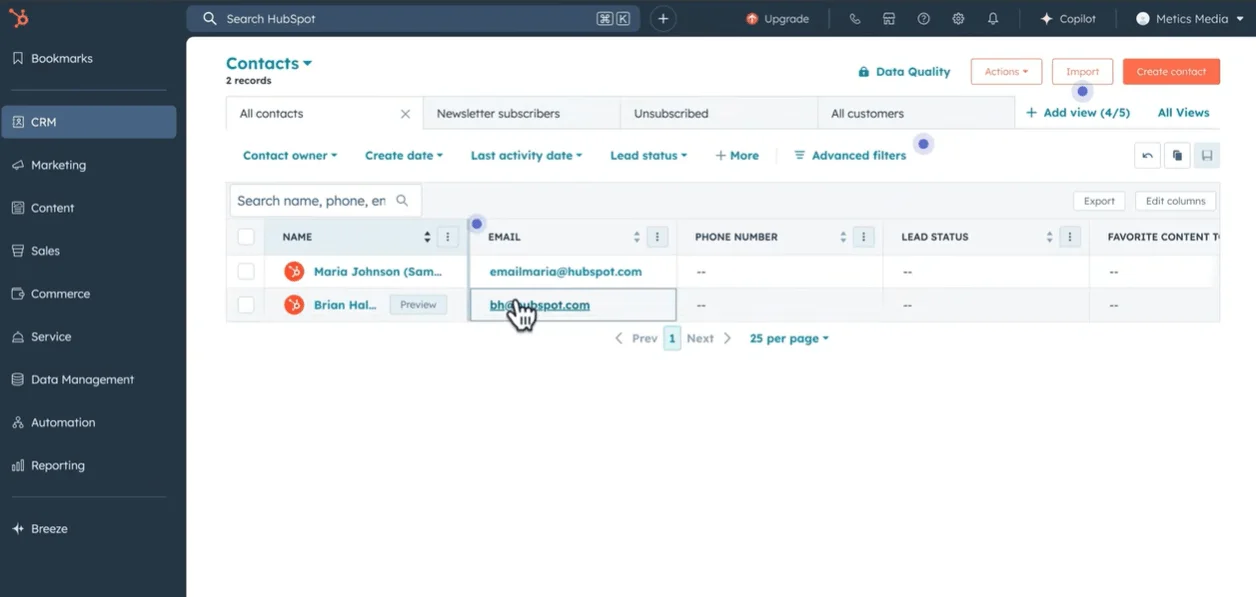
- Free CRM with unlimited contacts
- Marketing Hub tied directly to sales pipeline and service tickets
- AI tools for content generation and conversation insights
- Thousands of native integrations
Pricing
| Plan | Price | Includes |
| Free | $0/mo | Basic CRM and marketing tools, up to 2 users |
| Marketing Hub Starter | $15–20/mo per seat (1,000 contacts) | Simple automation, professional branding |
| Professional | $890/mo (2,000 contacts, 3 seats) | Full automation, phone support, plus $3,000 onboarding fee |
| Enterprise | $3,600/mo (10,000 contacts, 5 seats) | Advanced reporting, larger onboarding fee |
What HubSpot has that Brevo doesn’t is a genuinely unified system: marketing, sales, and service data all living against the same contact record, so a support ticket, a deal stage, and an email open show up in one place instead of three. That’s a real advantage for teams that need it, and mostly wasted infrastructure for teams that don’t. For a business that just wants to run email campaigns, the CRM and pipeline tooling sit unused, and Brevo covers the actual need at a fraction of the price.
Based on vendor documentation and our implementation experience, HubSpot earns its cost once marketing, sales, and support genuinely need to share the same data, not before.
8. Constant Contact
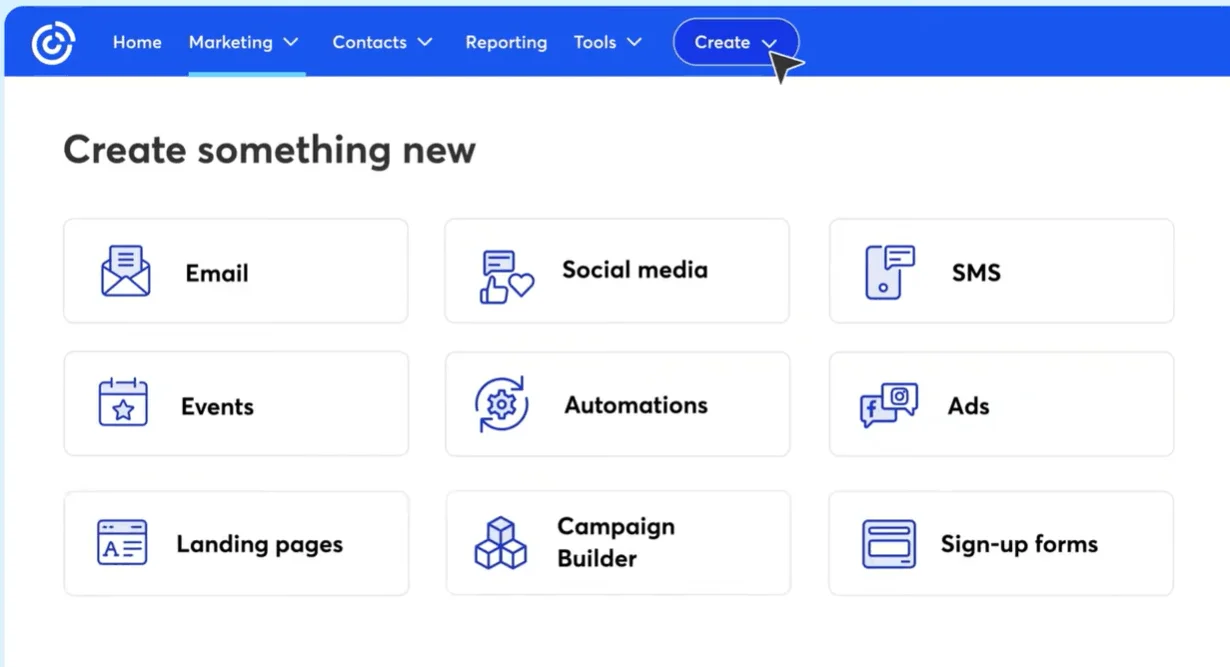
Constant Contact tends to come up with clients who run in-person events alongside their email program. Having ticketing and RSVP tracking sit next to the campaign builder matters operationally: it means one login and one contact list instead of syncing a separate events platform with the email tool, which is where a lot of manual errors creep in during a busy event week.
Standout features
- Built-in event ticketing with Stripe and PayPal payment support
- Social media scheduling alongside email campaigns
- AI-powered brand kit that pulls assets from your website
- Phone and live chat support available even on lower plans
Pricing
| Plan | Price | Includes |
| Lite | $12/mo (500 contacts) | 10x send allowance, basic ticketing/social scheduling r |
| Standard | $35/mo (500 contacts) | 12x send allowance, segmentation, automation, A/B testing |
| Premium | $80/mo (500 contacts) | 24x send allowance, advanced automation, custom reporting |
Where Constant Contact beats Brevo: For clients running events alongside email campaigns, having ticketing and RSVP management in the same dashboard removes a tool Brevo can’t replace.
Where Brevo wins: Automation on Constant Contact’s entry tier is limited to simple fixed-interval sequences; conditional paths and A/B splits require Standard or above. Brevo also has a real free plan, and Constant Contact doesn’t.
Businesses whose calendar revolves around events, conferences, workshops, local promotions get real operational value here. Programs built around ongoing automation rather than event promotion are better served by Brevo or ActiveCampaign.
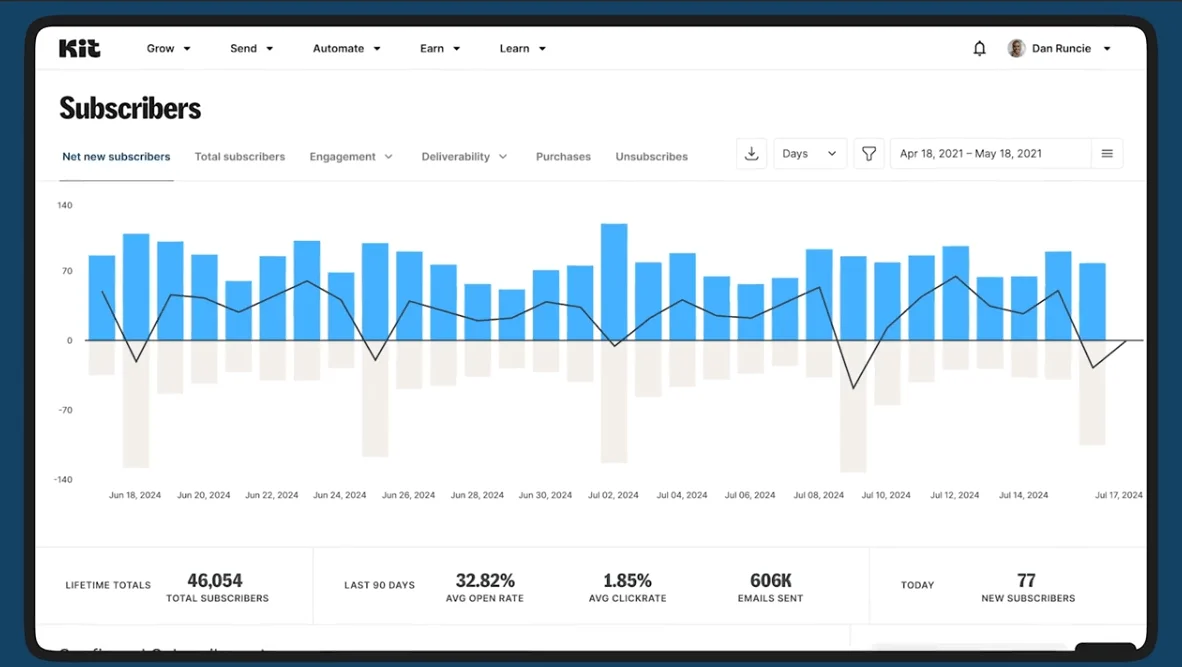
9. Kit (formerly ConvertKit)
Kit is built around one thing: getting creators paid directly from their list, without a separate storefront or checkout tool bolted on. A course seller, a paid newsletter writer, or a membership operator can take payment natively inside Kit, no Stripe page linked from an email, no third-party cart, which matters because every extra step between a subscriber and a purchase is a place they can drop off. That monetization layer is the reason we point creators here rather than toward a general-purpose email tool.
Standout features
- Visual automation builder with unlimited sequences
- Sell digital products, subscriptions, and one-off donations natively
- Recommendations network for organic subscriber growth
- Single list with unlimited tags, avoiding duplicate billing for the same contact
Pricing
| Plan | Price | Includes |
| Newsletter (Free) | $0/mo | Up to 10,000 subscribers, unlimited broadcasts/landing pages, 1 automation |
| Creator | $39/mo, or $33/mo annual (1,000 subs) | Unlimited automations, native product/subscription sales |
| Creator Pro | $79/mo, or $66/mo annual (1,000 subs) | Deliverability reporting, Facebook custom audiences |
Where Kit beats Brevo: Native payment support and the 10,000-subscriber free ceiling are both unusually generous for a creator-focused tool. Brevo isn’t built for direct monetization at all.
Where Brevo wins: Kit has no multichannel messaging and no ecommerce automation for physical product businesses. It also takes a commission on certain in-platform earnings, and its paid tiers got noticeably more expensive after the 2025 price increase.
For a business built on audience monetization, courses, paid newsletters, and memberships, this is usually the clearest recommendation on the list. A business selling physical products or needing SMS is better served by Brevo or Omnisend.
10. beehiiv
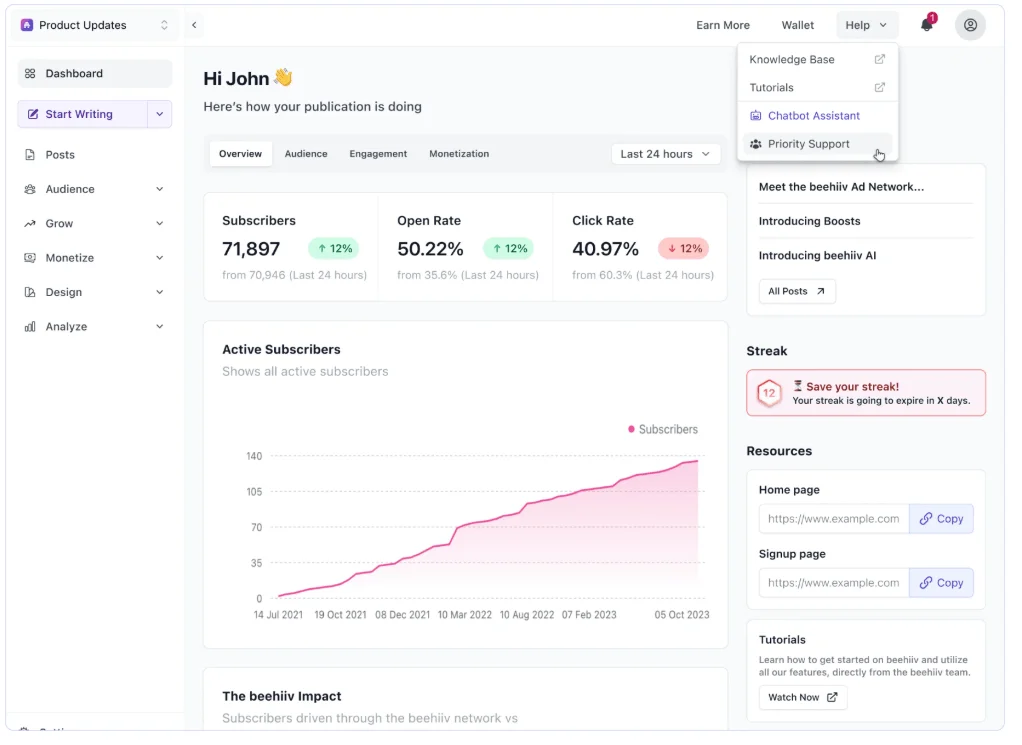
From our testing, beehiiv behaves more like a publishing platform than a traditional email marketing platform. The combined newsletter and SEO blog output matters for growth specifically: a single piece of content reaches existing subscribers by email and pulls in new readers through search, instead of the two channels needing separate content pipelines.
Standout features
- Publish a newsletter and an SEO-optimized blog post from the same piece of content
- Ad network, paid subscriptions, and digital product sales with 0% commission
- Referral program and paid boosts for subscriber growth
- Built-in website and landing page builder
Pricing
| Plan | Price | Includes |
| Launch (Free) | $0/mo | Up to 2,500 subscribers, unlimited sends, no monetization tools |
| Scale | From $43/mo annual, $49/mo monthly | Paid subscriptions at 0% commission, ad network, automations |
| Max | From $96/mo annual, $109/mo monthly | Removes beehiiv branding, up to 10 publications, unlimited team seats |
Where beehiiv beats Brevo: For publishers monetizing directly through subscriptions or an ad network, beehiiv takes zero platform commission. Brevo isn’t built for content monetization.
Where Brevo wins: beehiiv has no SMS, no transactional email, and no CRM. Its pricing also has a real cliff: Scale’s advertised $43 to $49/mo rate only applies under 1,000 subscribers, and since the free Launch tier caps at 2,500, most accounts leaving it land straight in the 2,500 to 5,000 subscriber bracket at roughly $89/mo, with no cheaper step in between. Worth planning for before committing.
Publishers sending weekly or more, and monetizing directly from the content, see the most value here. For occasional senders, or businesses not building a publishing operation, Brevo stays simpler and cheaper.
11. GetResponse
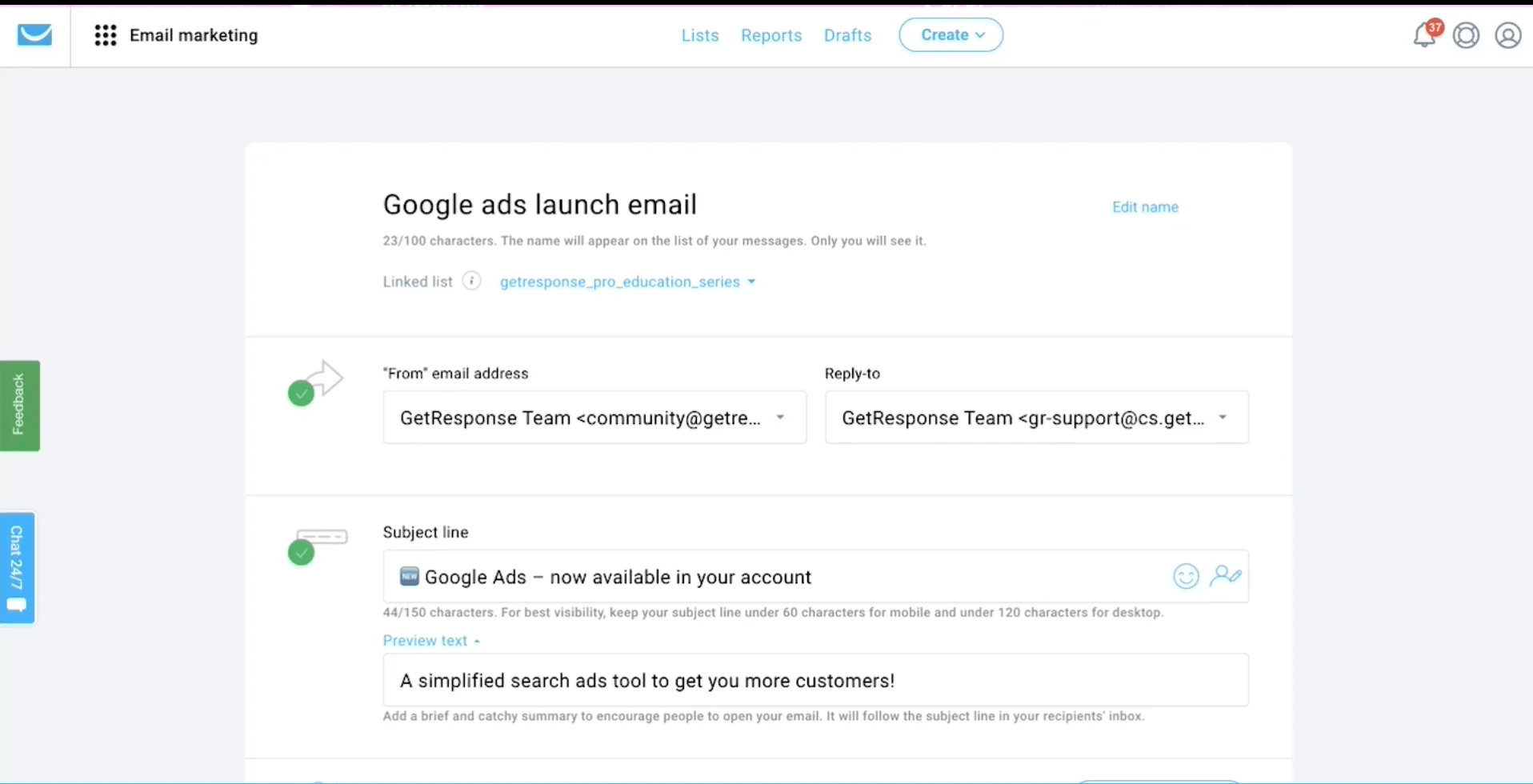
Clients who come to us wanting to launch something often end up on GetResponse, because it hands them a structure instead of a blank canvas. That structure matters most in the first two weeks of a launch: instead of researching what a funnel should even look like, a client gets a template that already sequences the landing page, follow-up emails, and offer in the right order, which shortens the time from idea to first send.
Standout features
- Over 30 prebuilt conversion funnel templates covering launches, webinars, and sales
- Built-in webinar hosting for up to 100 attendees on paid plans
- Onsite messaging including popups and sticky bars
- Revenue attribution dashboard tied to specific workflows
Pricing
| Plan | Price | Includes |
| Free | $0/mo | 500 contacts, limited monthly sends |
| Starter | From $19/mo (1,000 contacts) | Unlimited sends, 1 automation workflow, landing pages, no webinars |
| Marketer | From $59/mo | Unlimited automation workflows, webinars up to 100 attendees, advanced segmentation |
| Creator | From $69/mo | Everything in Marketer plus course creation and paid newsletters |
Where GetResponse beats Brevo: The funnel builder gives clients launching a new offer a guided path, landing page, email sequence, and follow up all in one place, instead of assembling separate tools the way you’d have to with Brevo. Built-in webinar hosting is also something Brevo doesn’t offer.
Where Brevo wins: GetResponse gates real marketing automation and webinars behind the Marketer tier. Brevo includes automation, with a 2,000 contact limit, on its free plan.
During implementation, the funnel templates are usually what wins over clients who’ve never built one from scratch before. A team that just needs straightforward automated sequences on a budget will still find Brevo cheaper to run.
12. Sender
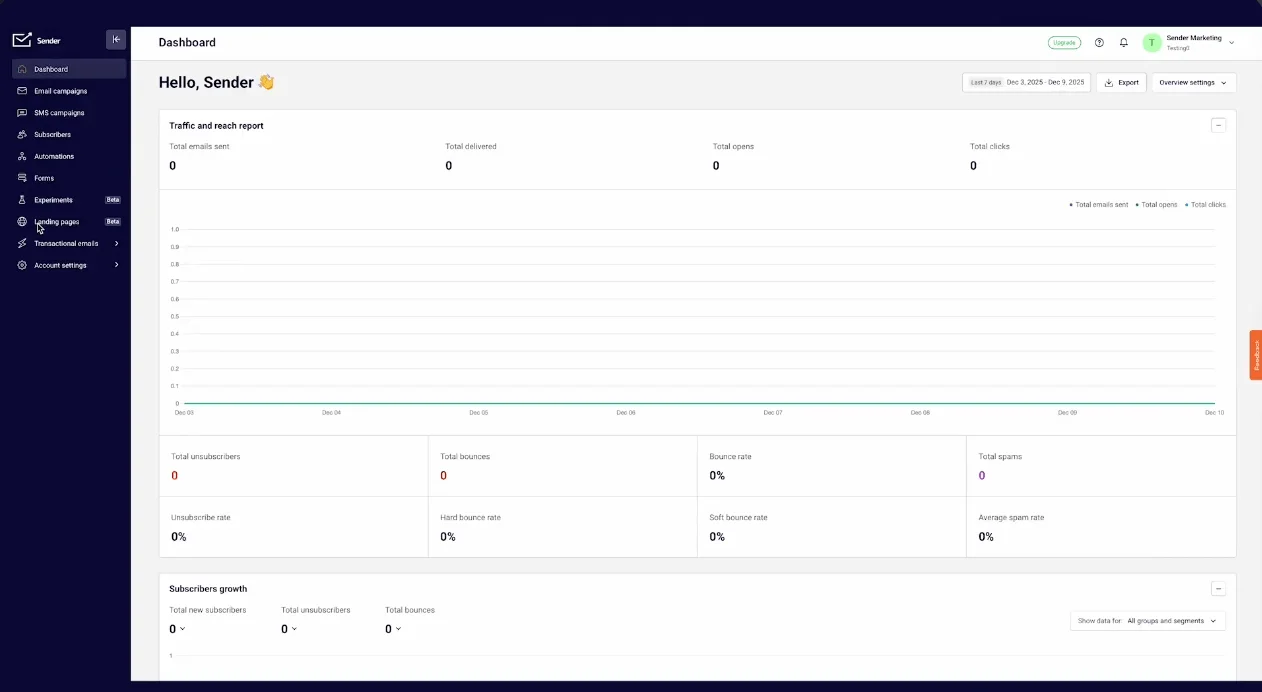
Sender is the platform we bring up when a client’s main constraint is genuinely just budget, and they still want automation and SMS included rather than upsold later. In the accounts we’ve set up on Sender, the free tier’s 2,500 contact allowance is usually enough runway to get a new list off the ground before any spend is needed, which matters for a business still validating whether email is even worth investing in.
Standout features
- Drag-and-drop builder with over 1,600 templates
- Multi-channel automation combining email and SMS
- Advanced audience segmentation for behavioral targeting
- Free migration support and 24/7 customer service
Pricing
| Plan | Price | Includes |
| Free | $0/mo | 2,500 contacts, 15,000 emails/mo, automation and SMS included |
| Standard | From $7/mo | ~12x contact count in monthly emails |
| Professional | From $14/mo | ~24x contact count in monthly emails, dedicated deliverability features |
Where Sender beats Brevo: Its free tier of 2,500 contacts is significantly more generous than Brevo’s model for accounts still building their list, and automation plus SMS come included rather than gated behind a higher tier.
Where Brevo wins: Sender has no built-in CRM, and its credit-based pricing system takes some getting used to compared to Brevo’s flatter contact-based structure. Brevo also has a broader integration ecosystem.
Lean, budget-conscious senders without CRM requirements tend to do well here. Once CRM enters the picture, Brevo, ActiveCampaign, or HubSpot are the stronger options.
13. AWeber
AWeber tends to appeal to a specific kind of client: someone who wants to sell directly off their list without adding a separate checkout tool and who values being able to get a real person on the phone without paying for a premium tier. During onboarding, that phone access shows up as a real difference; clients who’ve been stuck in email support queues elsewhere notice it immediately.
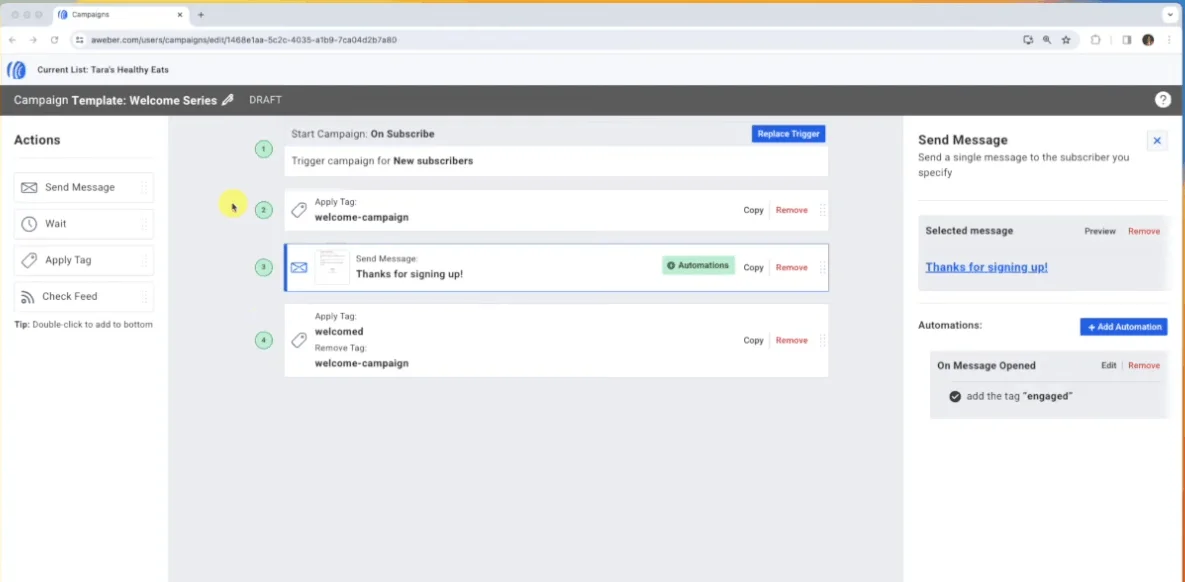
Standout features
- AI writing assistant for full email drafts
- Built-in store supporting payments in over 100 currencies
- Unlimited landing pages
- Phone and live chat support available on free plans
Pricing
| Plan | Price | Includes |
| Lite | $12.50/mo annual, $15/mo monthly (500 subs) | 10x send volume, 3 landing pages, 3 automations |
| Plus | $20/mo annual, $30/mo monthly (500 subs) | Unlimited lists, automations, landing pages, branding removal |
| Unlimited | $899/mo flat | Unlimited subscribers, dedicated account management |
Where AWeber beats Brevo: Built-in payments mean clients can sell directly from an email list without adding a separate checkout tool, something Brevo doesn’t support. Phone support on paid tiers is also more accessible than Brevo, which reserves phone support for its priciest plans.
Where Brevo wins: AWeber’s subscriber counting can penalize accounts with contacts on multiple lists, since they’re counted twice, and it lacks Brevo’s send time optimization feature. Brevo also has a genuine permanent free plan; AWeber’s is trial only.
Small businesses and solo creators who want built in payments and real human support without a learning curve are usually happiest here. Larger lists with complex segmentation needs scale more predictably on Brevo.
14. Mailjet
Mailjet solves a very specific problem we hear from marketing teams more than you’d expect: several people trying to work on the same campaign at once without stepping on each other. Real-time co-editing matters for teams where a copywriter, a designer, and a manager all need to touch the same email before it ships, since the alternative is usually a slower relay of exported drafts and Slack messages.
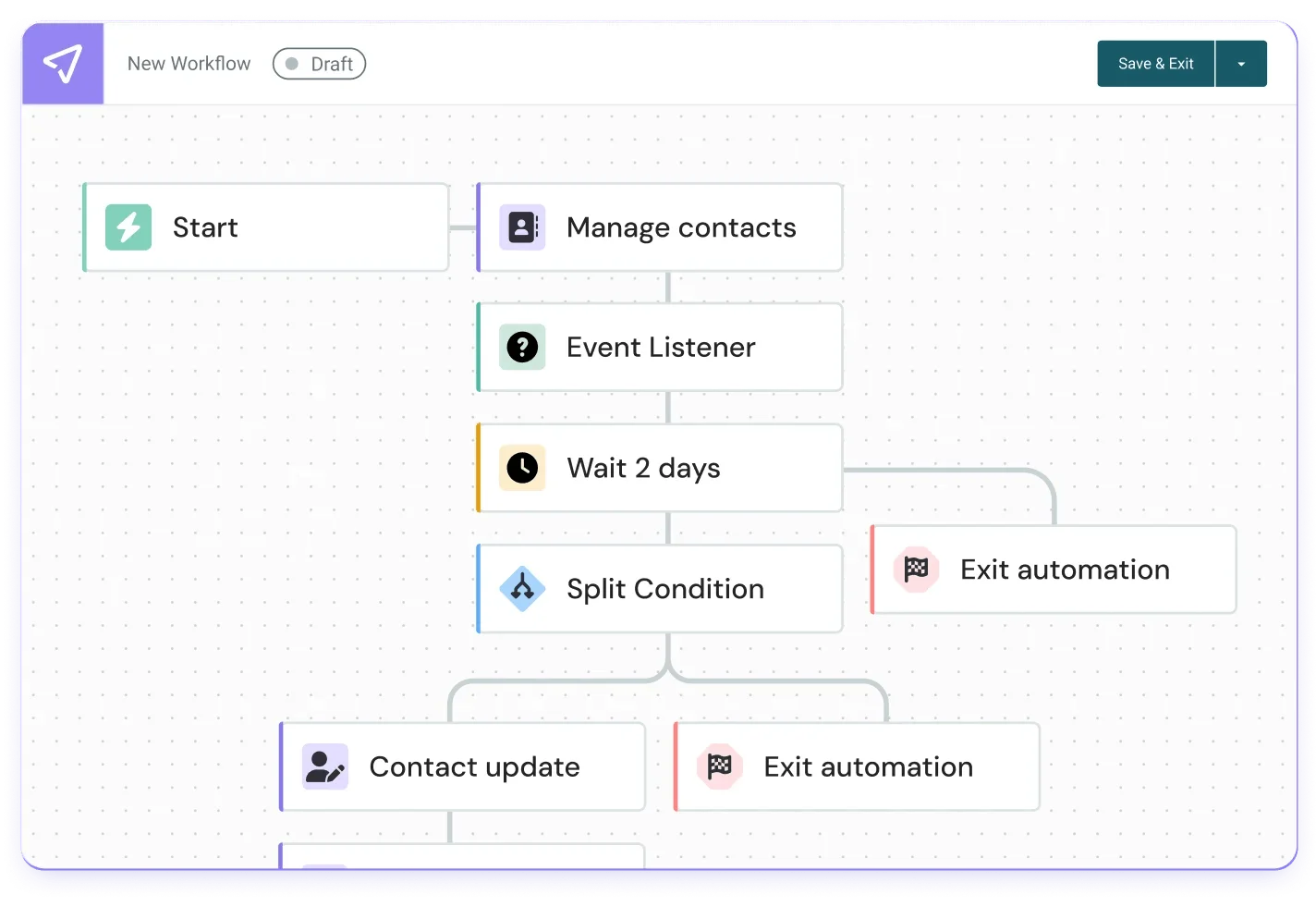
Standout features
- Low learning curve with a straightforward interface
- 100+ templates included
- Generous free plan relative to list size
- Simple segmentation and automation for basic use cases
Pricing
| Plan | Price | Includes |
| Free | $0/mo | 6,000 emails/mo, capped at 200/day, 1,000 contacts |
| Starter | $9/mo | 8,000 emails/mo, 2,000 contacts |
| Essential | From $17/mo | 15,000 emails/mo, unlimited contacts, segmentation, AI content tools |
| Premium | From $27/mo | Adds automation, up to 10-version A/B testing |
Where Mailjet beats Brevo: For teams where multiple people build the same campaign together, Mailjet’s real-time co-editing is a genuine workflow improvement that Brevo doesn’t offer at all. Mailjet also supports up to 10 version A/B tests against Brevo’s two.
Where Brevo wins: Brevo’s free plan is more generous, 300 emails a day versus Mailjet’s 200, and includes segmentation, dynamic content, and automation free, all of which sit behind Mailjet’s paid tiers.
Real-time collaboration is really the single feature that justifies moving to Mailjet. Outside that specific need, Brevo’s broader free feature set is the better value.
Best Free Brevo Alternatives
Brevo’s free plan is genuinely generous: unlimited contacts and around 9,000 emails a month. From our research, a few platforms on this list still hold their own against it in specific ways. Here’s how each compares.
MailerLite
Free plan limits are tighter than Brevo’s, capping at 250 subscribers and 2,500 emails a month. Up to 3 automations are included, along with a landing page and a custom HTML editor. Beginners and newsletter senders who want a clean editor will find this the stronger pick; Brevo wins on raw volume.
Omnisend
Contacts and sends are capped low at 250 and 500 a month, well under Brevo’s limits. Free users get full access to prebuilt ecommerce automations like abandoned cart and post-purchase flows. For a Shopify or WooCommerce store, from what we have seen that store-driven automation carries more weight than the smaller contact ceiling.
Kit
Kit’s model runs opposite to Brevo’s. Contacts are capped at 10,000. Sending is unmetered, with no daily limit. For creators who need a large free list and frequent sends, we find this a good fit, provided they can work within just one automation rule and minimal integrations.
beehiiv
Subscribers are capped at 2,500. There’s no monthly send limit at all, which matters for publishers sending daily or multiple times a week, where Brevo’s 300 a day cap could become a constraint. From our experience, automation stays basic, and monetization tools are gated to paid tiers, so this is a publishing tool first.
Mailjet
Mailjet’s free plan offers around 1,000 contacts and 6,000 emails a month, less volume than Brevo. It adds SMTP/API access for transactional email and real-time co-editing, both areas Brevo doesn’t emphasize. A small dev-led team wanting marketing and transactional email in one free tool may find this a closer match to Brevo’s no-paywall approach than the contact numbers alone suggest.
Who Should Look for Brevo Alternatives
Brevo works well for lean, early-stage sending. We recommend it often. But certain needs push teams toward a different platform, and these are the situations where we’ve seen that switch actually pay off.
Fast-growing send volume or automation complexity
Brevo prices its plans around email volume instead of contact count. We’ve watched client bills get harder to predict as sending frequency picks up, especially once a team starts running frequent automations or multi step sequences. If your program is actively scaling, that’s worth budgeting around before it surprises you.
Ecommerce brands wanting deeper personalization
Brevo’s product recommendations, discount codes, and revenue reporting stay thin without third party add ons. We set up Klaviyo and Omnisend for ecommerce clients specifically because both platforms were built around behavioral segmentation from the start. In practice, that shows up in cart abandonment flows and repeat purchase campaigns that react to what a shopper actually did, not just whether they opened an email.
Teams needing advanced conditional logic
Brevo’s automation stays fairly straightforward next to what ActiveCampaign or HubSpot offer. ActiveCampaign supports conditional branching, so a single workflow can send contacts down different paths based on their behavior. HubSpot ties that same logic directly to CRM data, something Brevo doesn’t offer natively.
Multiple people co editing the same campaign
Brevo doesn’t support real time collaborative editing inside a single campaign. Mailjet does. We’ve run accounts where a copywriter, designer, and manager all touch the same email, and being able to work on it together beats passing drafts back and forth by email or Slack.
Creators monetizing directly through their list
Brevo has no native tooling for selling products, subscriptions, or memberships from an email list. Kit and beehiiv were both built around that use case, letting creators take payment without bolting on a separate storefront or checkout tool. For a client running a paid newsletter or course, we’ve seen that native monetization decide the platform choice more than any other single feature.
Businesses needing revenue attribution
Brevo’s reporting doesn’t tie a campaign to a specific dollar figure the way some competitors can. Mailchimp’s per product revenue reporting shows whether a specific promotion actually drove sales, not just opens and clicks. Klaviyo offers a similar depth of attribution built around ecommerce data.
Accounts hit by reliability concerns
We’ve had a handful of clients report account suspensions and inconsistent deliverability on Brevo over the past year. For businesses where uninterrupted sending is critical, transactional emails or time sensitive campaigns especially, that’s a real operational risk to weigh. Deliverability varies with sender reputation and list quality too, so it’s not the whole picture, but it’s worth going in with eyes open.
How to Choose the Right Brevo Alternative
| If you need… | Consider |
| Predictable pricing at scale | MailerLite, Moosend, Sender |
| Deep ecommerce automation | Klaviyo, Omnisend |
| Advanced automation and CRM | ActiveCampaign, HubSpot |
| Team collaboration on campaigns | Mailjet |
| Event promotion and social scheduling | Constant Contact |
| Creator monetization tools | Kit, beehiiv |
| The simplest possible setup | AWeber |
Based on our testing and experience, we always recommend running a real campaign through your shortlisted platforms before making a final decision. The template editor, the automation builder, and the reporting dashboard make up most of your daily interaction with any platform, and a trial period will show whether that workflow feels natural.
Migrating From Brevo: What to Expect
Migration generally breaks down into three steps.
Export contacts and custom fields: Brevo exports contacts as CSV files, which nearly every alternative accepts directly. Custom fields, tags, and engagement history such as opens and clicks don’t always map cleanly, so audit which fields your automations depend on before you move.
Re-authenticate your sending domain: SPF, DKIM, and DMARC records need to point to your new platform’s sending infrastructure. Most providers walk you through this during onboarding. Skipping or misconfiguring these records will hurt deliverability from your first send.
Rebuild your automations manually: Workflows do not transfer between platforms. Based on the migration projects we’ve managed, straightforward migrations typically take two to four hours, while more complex automation rebuilds can take several days. This is also a natural point to simplify sequences that grew more complicated than they needed to be.
Sender reputation resets with each new sending infrastructure. Start by sending to your most engaged segments first, then increase volume gradually over two to three weeks.
Consent and compliance requirements differ by region and don’t automatically carry over either. Review the CAN-SPAM Act requirements from the U.S. Federal Trade Commission and confirm how your new platform manages opt-in records before your first send.
FAQs
Is Brevo the same as Sendinblue?
Yes. Sendinblue rebranded to Brevo in 2023. The platform and underlying features stayed largely the same through the name change.
Is Brevo still a good email platform in 2026?
For early-stage businesses and lean teams sending a low volume of email to a large contact list, Brevo remains a solid, affordable option. Teams running frequent automation or needing deep segmentation typically outgrow it faster.
What is the cheapest Brevo alternative?
Among paid plans, Sender and Moosend start near $7 to $9 per month. For free plans, beehiiv and Kit both offer generous limits relative to list size before any payment is required.
How do I migrate my contacts and automations from Brevo?
Contacts export as CSV and import cleanly into nearly every alternative. Automations do not transfer and must be rebuilt manually on the new platform. Budget a few hours for a simple setup and up to a week for complex, multi-step workflows.
Does switching platforms hurt email deliverability?
Temporarily, yes, since sender reputation is tied to sending infrastructure and does not transfer between platforms. Authenticating your domain properly and ramping up volume gradually over two to three weeks limits the impact.
Is Brevo good for ecommerce specifically?
Brevo supports basic ecommerce automation, but Klaviyo and Omnisend both offer deeper behavioral segmentation and native integrations with Shopify, WooCommerce, and BigCommerce built specifically for retail.
Why do businesses leave Brevo as they grow? The most common reasons are unpredictable bills as send volume increases, automation that lacks deep conditional branching, and reporting that stops short of revenue attribution once campaigns get more sophisticated.